What Is Crawl Budget and How to Optimize It?

When I first started working as an SEO analyst eight years ago, most conversations around search visibility focused on keywords, backlinks, and content. Crawl budget was rarely discussed outside technical SEO circles. In fact, many businesses across Birmingham that I worked with had never heard the term before.
At the time, websites were generally smaller, content production was slower, and search engines faced fewer challenges in processing them. As digital marketing matured, websites grew larger and more complex. E-commerce stores began publishing thousands of product pages, publishers produced content at scale, and businesses invested heavily in SEO-driven growth.
Over the years, I have worked with companies across Birmingham and throughout the UK, ranging from local service providers to enterprise-level websites. One thing I have consistently noticed is that many businesses focus heavily on creating new content while overlooking whether search engines can efficiently discover and process that content. And this is precisely where the crawl budget becomes important.
Today, in an environment where search engines and AI systems process billions of pages every day, crawl efficiency plays a bigger role than ever before. Understanding crawl budget is no longer reserved for technical specialists but has become an important part of modern SEO strategies
In this guide, I will explain what crawl budget is, where the concept originated, why it matters today, and how businesses can optimize it to improve their visibility in both traditional search engines and AI-driven search environments.
What Is Crawl Budget?
In simple terms, crawl budget refers to the number of pages a search engine is willing and able to crawl on a website within a specific period of time. Search engines like Google allocate a certain amount of resources to each website and decide how many URLs they will visit during a crawl session. Think of it as a schedule!
Google has billions of pages to evaluate across the internet and the systems cannot spend unlimited time on every website. Instead, it prioritizes where its crawlers should focus their attention. If your website contains 10,000 pages but Google only crawls a portion of them regularly, some content may take longer to be discovered, updated or indexed. This is essentially what the crawl budget manages.
A History of Crawl Budget
In the early days of the internet, websites were relatively small. Search engines could easily crawl and index most websites without significant resource concerns. As the web expanded dramatically, search engines faced a growing challenge. Millions of websites grew into billions, and search engines needed a system to identify the following major elements:
Which sites deserved more crawling attention
Which pages should be revisited frequently
How to prevent servers from becoming overloaded
This led to the development of crawl budget management systems. Over time, Google refined the process by evaluating two primary factors: Crawl demand and crawl capacity limit. These concepts continue to form the foundation of the crawl budget today.
How Crawl Budget Actually Works
Before looking at optimization techniques, it helps to understand how search engines decide where, when, and how often to crawl a website. The crawl budget is not assigned randomly. It is influenced by a combination of website performance, content value, and the way search engines assess the importance of different pages.
Crawl Demand
Crawl demand can be defined as the level of interest a search engine has in revisiting and crawling the pages on your website. This phenomenon helps you determine how frequently search engine bots return to check for new content, updates or changes. Several factors influence crawl demand, including content freshness, website authority, backlink profile, user engagement signals, and publishing frequency.
For instance, a news website that publishes hundreds of articles every day will typically attract far more crawl activity than a static website that rarely changes.
Over my eight years working with businesses across Birmingham, I have observed that websites publishing relevant, high-quality content on a regular basis tend to receive more frequent visits from search engine crawlers. This further helps new pages get discovered and indexed faster.
Crawl Capacity Limit
Crawl capacity can be defined as the number of pages a search engine is willing to crawl on your website without negatively affecting its performance or stability. Search engines constantly monitor factors such as server response times, website speed, error rates and overall server health to determine how much crawling your site can comfortably handle.
If a website loads quickly and responds consistently, search engine bots can crawl more pages during each visit. On the other hand, websites that experience slow loading times, frequent server errors or performance issues may see reduced crawl activity.
Improving website performance essentially leads to more efficient crawling, helping search engines discover and process important content more effectively!
Common Crawl Budget Problems
After auditing hundreds of websites over the years, below are some of the recurring issues that I’ve encountered:
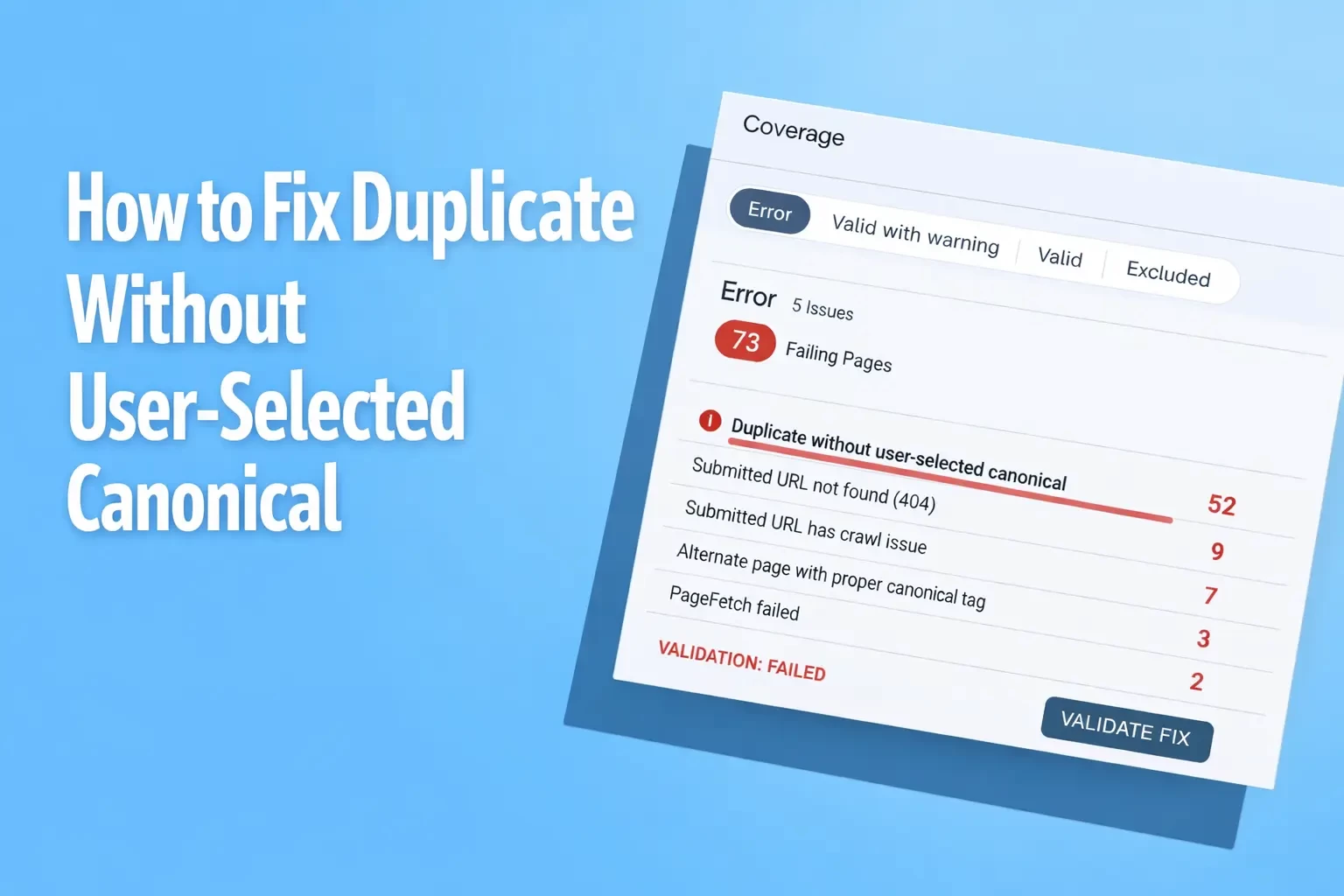
Duplicate Content
Duplicate content occurs when multiple URLs display the same or nearly identical content, causing search engines to spend unnecessary resources crawling repeated pages. For example, an online organic food store may have a product page available at:
https://organicfoodstore.com/products/olive-oil
https://organicfoodstore.com/collections/all/olive-oil
https://organicfoodstore.com/products/oil/olive-oil
Although the content is identical, search engines may crawl all three URLs separately. Similarly, websites that allow both HTTP (http://) and HTTPS (https://) versions to remain accessible can unintentionally create duplicate pages. Over time, this practice reduces crawl efficiency and may dilute ranking signals across multiple URLs.
Broken Links and Error Pages
Broken links occur when pages that were once available have been removed, renamed, or moved without proper redirection.
For example, a Birmingham-based estate agency may have published a blog called "Best Areas to Buy Property in Birmingham 2022" and later deleted it.
If internal links still point to that URL, search engines repeatedly encounter a 404 error page. On larger websites, such occurrences can happen hundreds of times. Instead of crawling active service pages, product pages, or blog content, search engine bots waste valuable crawl resources visiting URLs that no longer serve any purpose.
Redirect Chains
Redirect chains happen when users and search engines must pass through multiple redirects before reaching the final destination. For example, a page originally located at:
https://footballers.com/services
May be directed to: https://footballers.com/our-services
Which is later redirected again to: https://footballers.com/coaching-services
In this case, Google must process three separate URLs before reaching the final page. Website redesigns, domain migrations, and CMS updates often create these chains accidentally. While one redirect is usually acceptable, multiple redirects across hundreds of pages can significantly reduce crawling efficiency and slow down the discovery of important content.
Orphan Pages
Orphan pages are pages that exist on a website but have no internal links pointing to them. For example, a digital agency may launch a new landing page targeting "SEO Services in Birmingham" but forget to add it to the website menu, sitemap, blog articles, or service pages.
The page technically exists and can be accessed directly through its URL, but search engines have very few ways to discover it naturally. As a result, valuable content can remain unindexed or receive very limited crawl activity despite having strong potential to attract organic traffic.
Infinite URL Parameters
Infinite URL parameters commonly occur on e-commerce websites with extensive filtering and sorting options. For example, an online clothing store might have a category page for men's shirts:
https://cinderella.com/mens-shirts
However, users can filter by color, size, brand, price, material, and sorting order, creating URLs such as:
https://cinderella.com/mens-shirts?colour=blue
https://cinderella.com/mens-shirts?colour=blue&size=large
https://cinderella.com/mens-shirts?colour=blue&size=large&brand=nike
https://cinderella.com/mens-shirts?colour=blue&size=large&brand=nike&sort=price
When multiplied across hundreds of products and filters, thousands of URL variations may get generated. Search engines may spend a significant portion of their crawl budget exploring these combinations instead of focusing on the website's most important pages.
Advantages of Optimizing Crawl Budget
When search engines spend more time crawling important pages and less time on unnecessary URLs, the entire website benefits. Crawl budget optimization helps improve content discovery, indexing efficiency, and overall search visibility. Here’s how optimizing crawl budget helps:
Faster Indexing
One of the biggest advantages of crawl budget optimization is faster indexing of new and updated content. When search engines can properly navigate your website without encountering unnecessary obstacles, they can discover important pages more quickly. This is particularly valuable for websites that regularly publish blogs, news articles, product listings or service pages, where timely indexing can directly impact digital visibility and traffic.
Better Search Visibility
Optimizing crawl budget helps search engines focus their attention on the crucial pages. Instead of spending resources on duplicate URLs, broken pages or low-value content, crawlers can prioritize key landing pages, service pages, and blog posts. As a result, important content has a better opportunity to index and rank in search results, supporting stronger organic visibility over time.
Improved Website Health
The process of improving crawl budget often uncovers technical SEO issues that may otherwise go unnoticed. Crawl analysis frequently identifies problems such as broken links, redirect chains, duplicate content, orphan pages, and slow-loading sections of a website. Addressing these issues improves crawl efficiency and contributes to a positive user experience and better overall website performance.
More Efficient Resource Usage
Search engines allocate a limited amount of crawling resources to every website. By optimizing crawl budget, businesses can help search engines spend those resources on valuable content rather than wasting them on unnecessary URLs or outdated pages. This becomes particularly important for larger websites with hundreds or thousands of pages, where efficient crawling can significantly improve content discovery and indexing performance.
How to Optimize Crawl Budget
Once crawl budget issues have been identified, the next step is optimization. While some improvements require technical adjustments, many are straightforward changes that help search engines crawl, understand, and prioritize your most valuable content more effectively.
Improve Site Speed
Website speed plays a direct role in crawl efficiency. When pages load quickly and servers respond without delays, search engines can crawl more URLs during each visit. On the other hand, slow websites often cause crawlers to reduce their activity, limiting how much content gets discovered and processed.
In my experience working with businesses across Birmingham, performance improvements such as image compression, browser caching, CDN implementation, and code optimization often contribute to both better user experiences and more efficient crawling. For larger websites with hundreds or thousands of pages, even small speed improvements can have a noticeable impact on crawl activity.
Strengthen Internal Linking
Internal links act as pathways that help search engines navigate a website. A well-structured internal linking strategy makes it easier for crawlers to discover important pages and understand how different sections of the site relate to one another.
For example, if a digital agencies in UK has service pages linked from the homepage, relevant blog posts, and category pages, search engines can find and revisit those pages more efficiently. I often recommend building clear content hierarchies where valuable pages are accessible within a few clicks rather than being buried deep within the website structure.
Clean Up XML Sitemaps
An XML sitemap serves as a guide that tells search engines which pages are worth crawling and indexing. However, many websites include outdated, redirected, duplicate, or non-indexable URLs in their sitemaps, creating unnecessary confusion for crawlers.
A clean sitemap should focus on important, indexable pages that provide value to users. For example, if an SEO agency has retired service pages or redirected blog posts, those URLs should be removed from the sitemap. Keeping the sitemap updated helps search engines focus their attention on the content that actually matters.
Fix Redirect Chains
Redirect chains occur when one URL redirects to another, which then redirects again before reaching the final destination. While redirects are often necessary, long chains can waste crawl resources and slow down content discovery.
For example, after several website redesigns, a service page may redirect from URL A to URL B, then URL C, and finally URL D. Search engines must process each step before reaching the destination page. Replacing these chains with direct 301 redirects helps crawlers reach important content faster while reducing unnecessary crawling activity.
Remove Low-Quality Pages
Not every page on a website contributes meaningful value. Thin content, outdated articles, duplicate service pages, and low-performing landing pages can consume crawl resources without supporting SEO goals.
I have worked on websites that contained hundreds of short pages with little unique information. In many cases, consolidating these pages into a smaller number of comprehensive resources improved both crawl efficiency and overall search performance. By reducing low-value content, search engines can focus more attention on pages that genuinely deserve visibility.
Use Canonical Tags Properly
Canonical tags help search engines understand which version of a page should be treated as the primary version when similar or duplicate content exists. This is particularly useful for e-commerce websites, filtered pages and content that can be accessed through multiple URLs.
For example, a product page may appear under several category URLs while displaying the same content. Without proper canonicalization, search engines may crawl and evaluate each version separately. By specifying the preferred URL through canonical tags, websites can reduce duplicate crawling and help consolidate ranking signals onto the most important page.
How Crawl Budget Fits Into an AI-Driven Search World
One of the biggest shifts I have witnessed recently is the rise of AI-powered search experiences. AI systems increasingly rely on web crawling, content discovery, and large-scale indexing processes to understand information. Although AI search works differently from traditional search engines, the underlying principle remains surprisingly similar. Content must first be discovered before it can be understood. A website with the follow elements is easier for both search engines and AI systems to process:
Clean architecture
Strong internal linking
Fast loading speeds
Clear content organization
As AI-driven search continues evolving, crawl efficiency becomes part of a broader discoverability strategy rather than simply a technical SEO task.
Tools I Use to Monitor Crawl Budget
Over the years, I’ve used the following tools to analyze and study crawl activity within websites:
Google Search Console
Screaming Frog
Semrush Site Audit
Ahrefs
Sitebulb
Log File Analysis Tools
These platforms help identify crawl waste, indexing issues, and opportunities for optimization.
Crawl Budget in Perspective: What Matters Now
After eight years of working with businesses across Birmingham and wider UK markets, I have seen technical SEO slowly move from being a background concern to a central part of search strategy. Crawl budget is one of those concepts that often sits quietly in audits, yet it directly influences how effectively search engines interact with a website.
What stands out most to me today is how the focus is shifting. Earlier, SEO work was heavily centered around content creation and link building in isolation. Now, with larger websites and more complex structures, the emphasis is increasingly on how efficiently search engines can move through a site and interpret what actually matters.
While crawl budget may not be a pressing issue for smaller websites, it becomes significantly more important for growing businesses, enterprise platforms, and content-heavy sites. In many cases, the difference between average and strong organic performance comes down to how well a website guides search engines toward its most valuable pages, rather than letting them get lost in unnecessary URLs.
Related Blog